
Cupping is a technique used to relieve muscle tension, improve circulation, and support the body’s natural detoxification process. Using either traditional fire cups or a vasopneumatic plastic pump, suction is created on the skin to gently lift and decompress the underlying tissues. This process increases blood flow, releases fascial restrictions, and helps clear stagnation—making it especially effective for relieving pain, muscle tightness, inflammation, and stress-related tension. It can also be beneficial for respiratory health, headaches, and athletic recovery.
Cupping can be booked as a standalone treatment or added at no cost to any private acupuncture or massage therapy session for deeper therapeutic benefit. While temporary circular marks may appear on the skin, they typically fade within a few days.
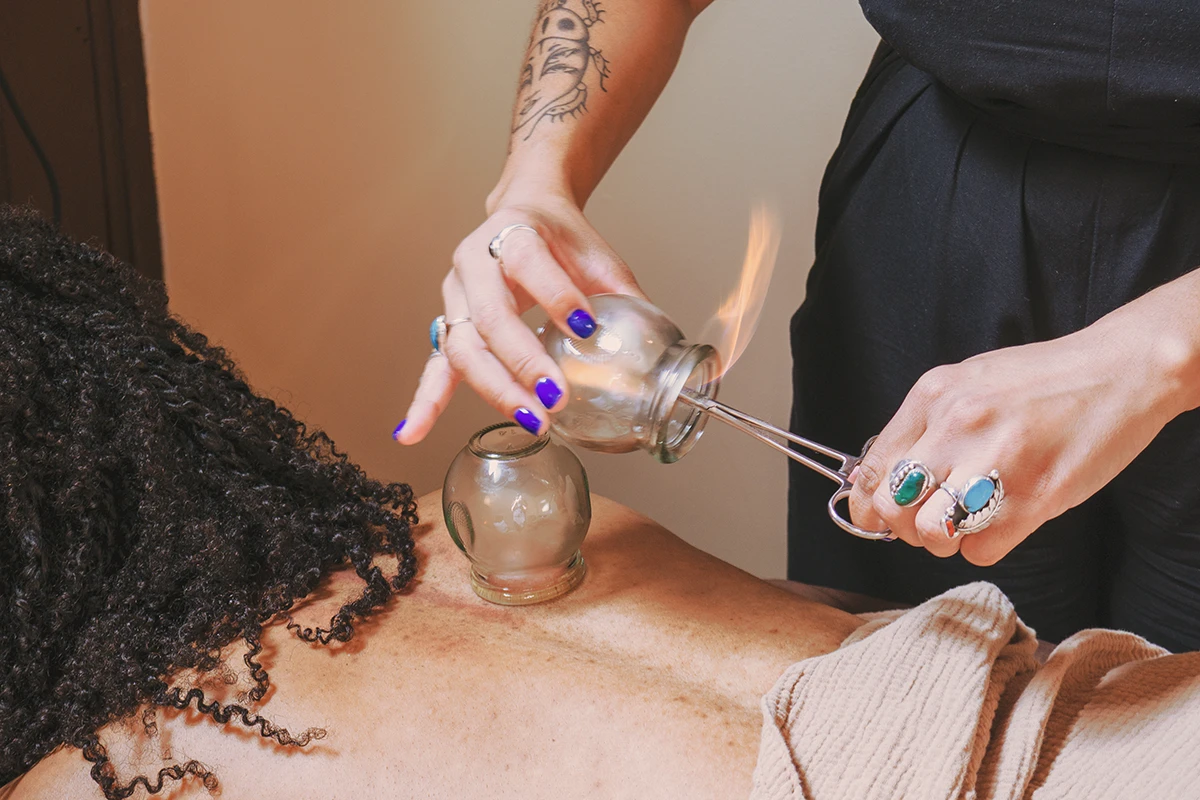

Cupping is a therapeutic technique that uses suction—either from fire cups or a vasopneumatic pump—to gently lift the skin and underlying tissue. This creates space for improved blood flow, releases muscle tension, and encourages the body’s natural healing processes.
Cupping is commonly used to treat muscle pain and tightness, back and neck tension, headaches, sports injuries, stress, and even respiratory issues like congestion or asthma. It’s also great for general relaxation and circulation support. The NIH provides a scientific overview.
Cupping should not be painful. Most people describe the sensation as a firm pulling or pressure that quickly becomes relaxing. Some areas may feel more sensitive depending on the tension or congestion present, but your practitioner will always adjust to your comfort level.
The circular marks left after cupping are not bruises. They are the result of blood and fluids being drawn to the surface and typically fade within a few days to a week. The color and duration of the marks can give insight into circulation and tissue health in that area.
Yes! Cupping can be scheduled as its own session or added to any private acupuncture or massage therapy appointment for deeper therapeutic benefit. Your practitioner will customize the treatment based on your needs and wellness goals.
Research is limited but growing. Some studies suggest benefits for chronic pain and musculoskeletal issues.